
Trying to decide between mandelic acid and lactic acid when your skin is dry, sensitive, and acne-prone? This guide compares two real-world products side by side so you can pick with confidence. We break down ingredient strength, texture, irritation risk, price, and who each option truly suits. Not sure where you fall on the oily/dry and sensitive/resistant spectrum? Start by taking the quiz to discover your skin type.
By Wishtrend Mandelic Acid Gentle Exfoliating Toner
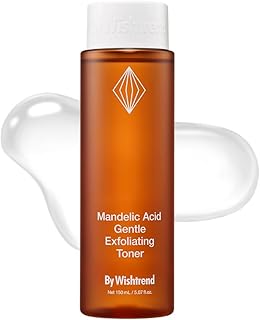
Price: $23.98
Mandelic acid is a larger AHA that penetrates more slowly, making it one of the gentlest acids for sensitive, acne-prone skin. This watery toner layers easily and includes supportive ingredients like niacinamide to help with tone and barrier friendliness. It targets clogged pores, bumps, and post-blemish marks without the sting many AHAs can cause. Best used 2–4 nights a week, it’s a low-drama way to smooth texture and fade PIH while keeping dryness in check.
Best for: Dry, sensitive, acne-prone faces needing gentle exfoliation and help with post-acne marks
AmLactin 15% Lactic Acid AHA Cream

Price: $29.99
This rich cream features 15% lactic acid, an AHA that both exfoliates and hydrates by boosting natural moisturizing factors. It’s buffered in a creamy base with barrier supporters like ceramide NP, urea, and colloidal oatmeal to soften rough, flaky skin. The texture is nourishing and occlusive, making it excellent for very dry or bumpy areas (think: body, elbows, KP) and for replenishing a compromised barrier. On acne-prone faces, the richness may be heavy—better as a targeted or body treatment if you clog easily.
Best for: Very dry, rough, or bumpy skin (especially body); dry, non-clog-prone facial skin needing intensive smoothing
Our Verdict
If your primary goal is a gentle, acne-friendly facial exfoliant that won’t spike irritation, choose the mandelic option: By Wishtrend Mandelic Acid Gentle Exfoliating Toner. Mandelic acid’s larger molecular size and antimicrobial lean make it well-suited to breakout-prone, redness-prone complexions. It’s easier to dose (toner format), layers light under serums and moisturizers, and helps lift dullness and post-acne marks without overwhelming a dry barrier.
Pick the lactic cream (AmLactin 15% Lactic Acid AHA) when your main issue is severe dryness, flaking, or rough texture—especially on the body. Lactic acid is inherently hydrating, and this formula adds urea, ceramide NP, and soothing colloidal oatmeal to restore suppleness. For acne-prone faces, proceed selectively: use as a spot treatment on very dry patches or reserve it for body care if you’re clog-prone.
Ingredients: Mandelic acid wins for acne-prone sensitivity thanks to slower penetration and helpful tone-evening. Lactic acid wins for barrier support and heavy-duty smoothing, particularly in a cream base. Texture: Toner (mandelic) is light and layerable; cream (lactic) is rich and occlusive. Price and value: By Wishtrend is $23.98 for 5.07 oz; AmLactin is $29.99 for 12 oz—better value per ounce, but they serve different roles. Skin-type fit: For dry, sensitive, acne-prone facial skin, go mandelic. For very dry or bumpy body skin (or non-clog-prone dry faces), go lactic.
Still unsure which acid or format your skin will love? Start with mandelic 2–3 nights weekly, then layer richer lactic on body or dry zones as needed. To personalize further, discover your skin type and build a routine that respects your barrier while clearing breakouts.

Leave a Reply